
Delivery day is the part of buying a container that most people have never done before. This page shows what the units look like, explains the three ways a container can be placed, and lists exactly what the driver needs from your site.
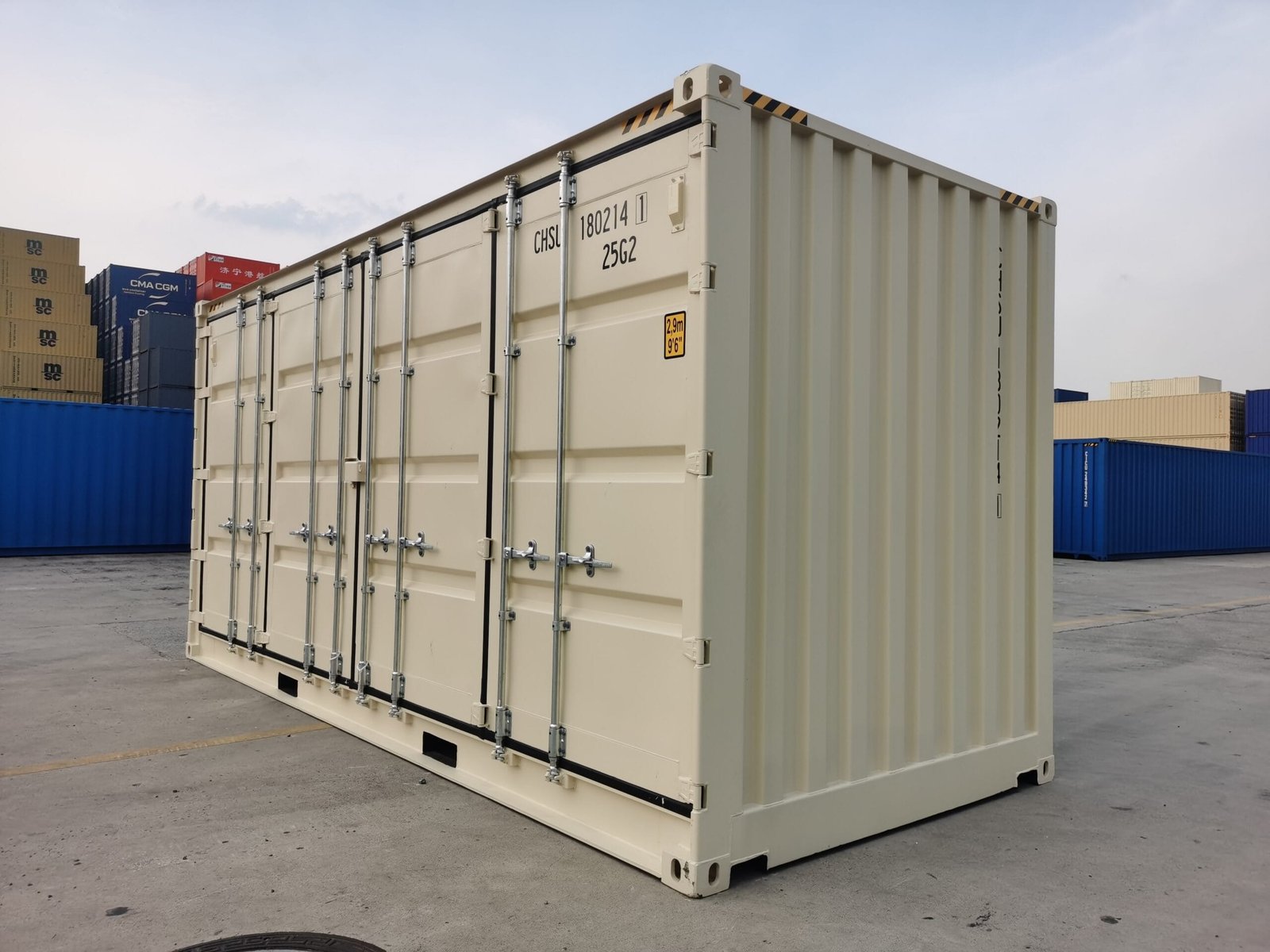
Containers in the yard
Photographs of stock rather than staged studio renders. Every listing on the site carries its own images, and we will send additional photographs of the specific unit allocated to your order before it is dispatched.
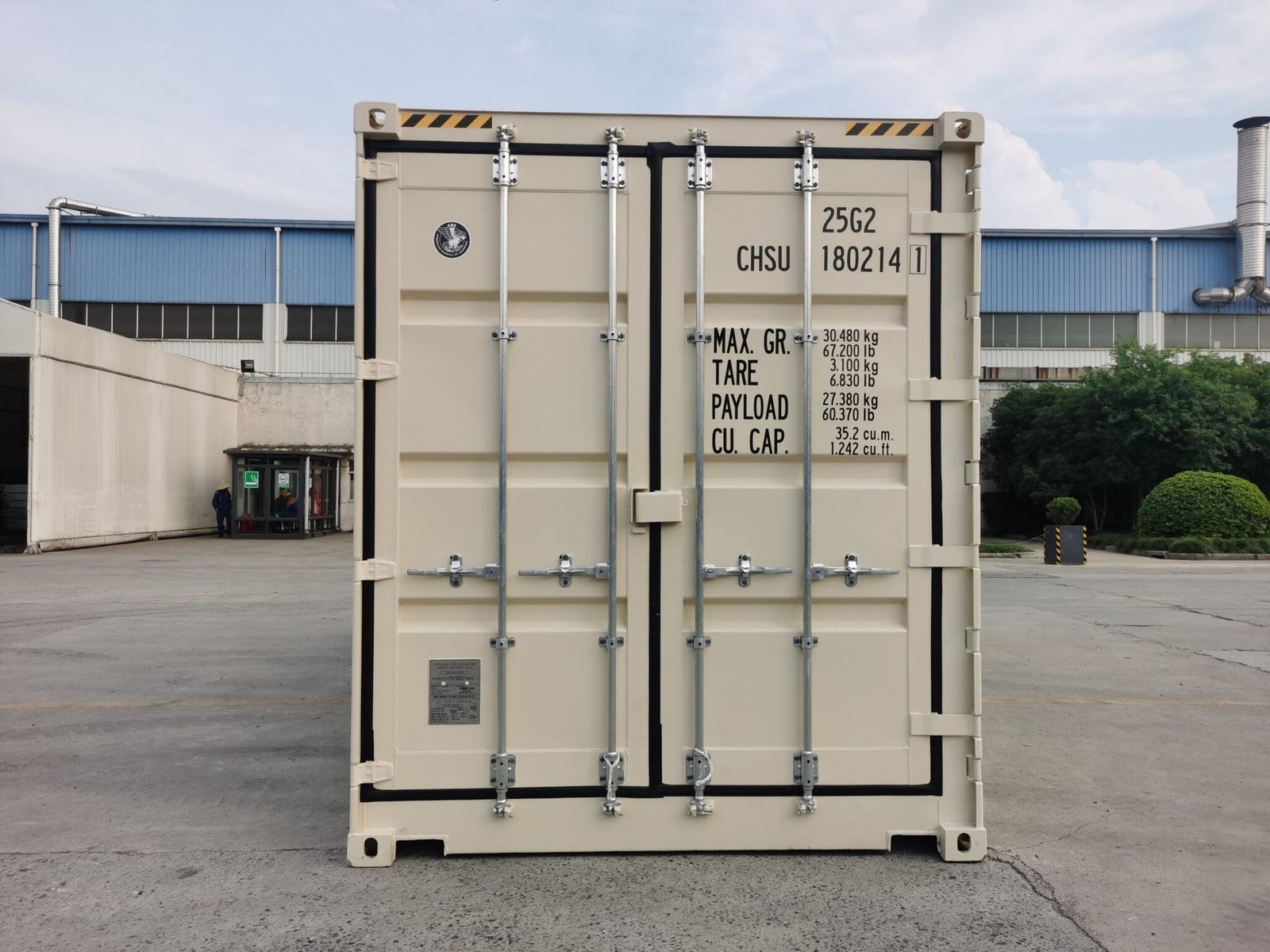
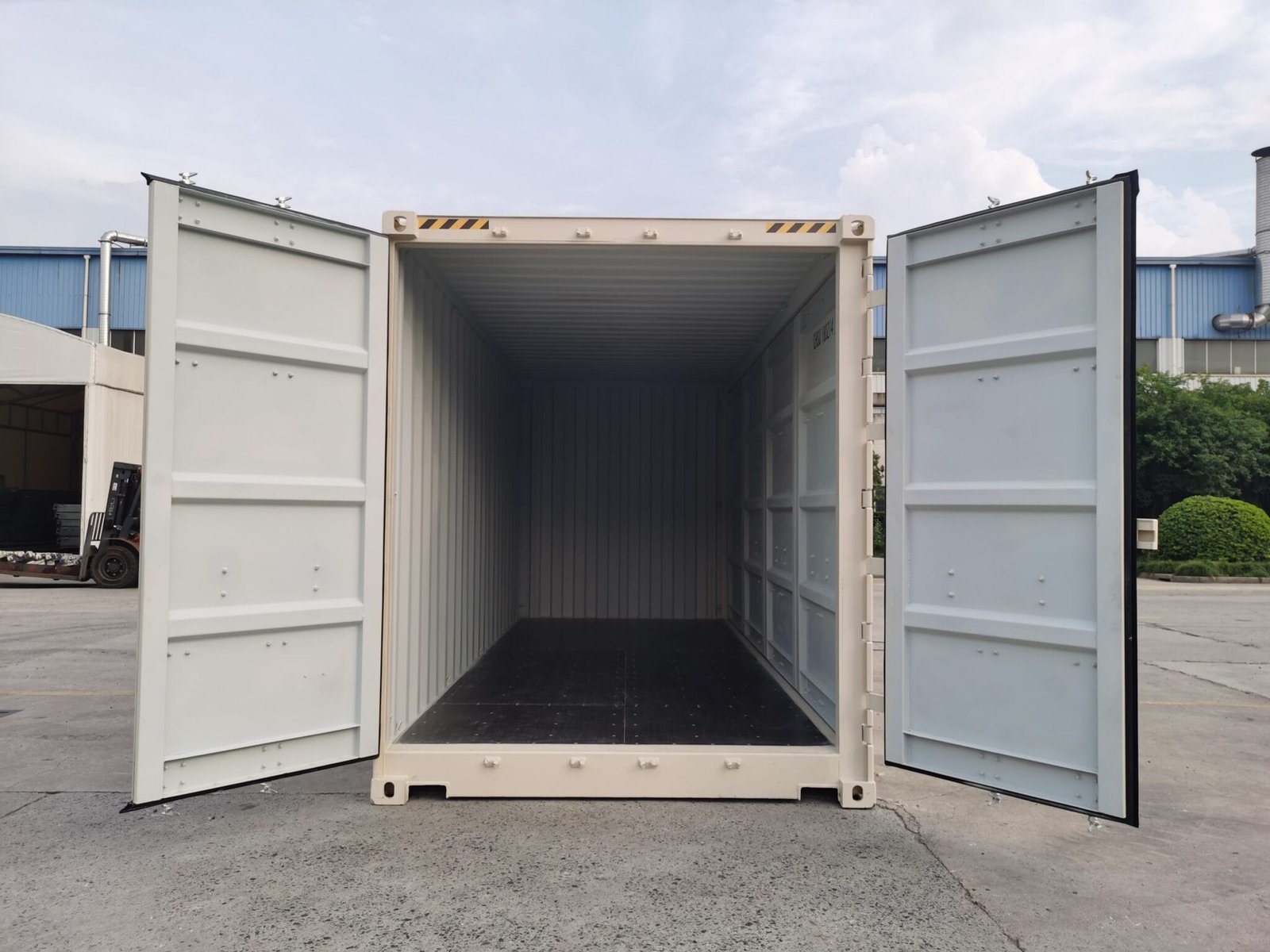
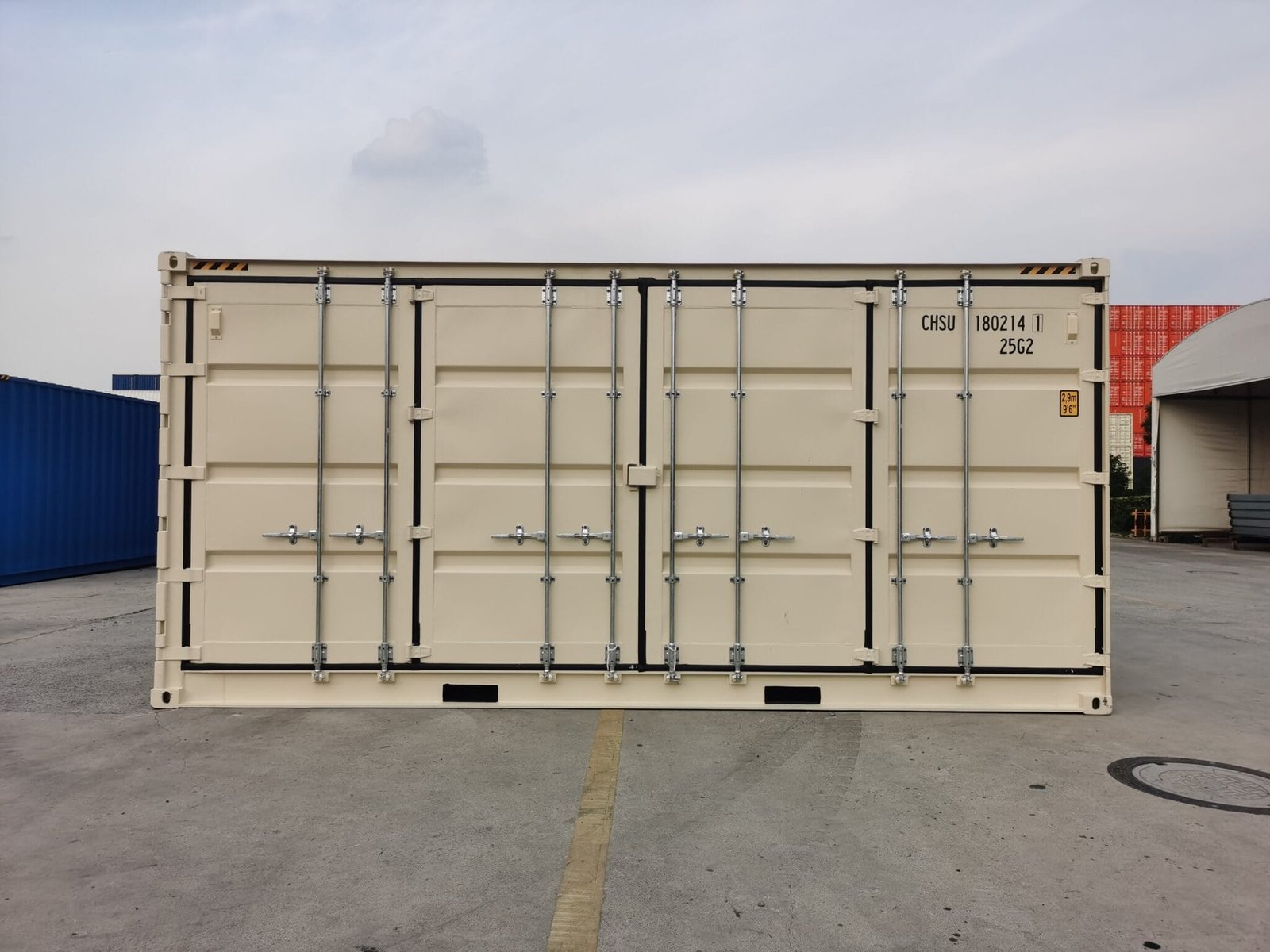
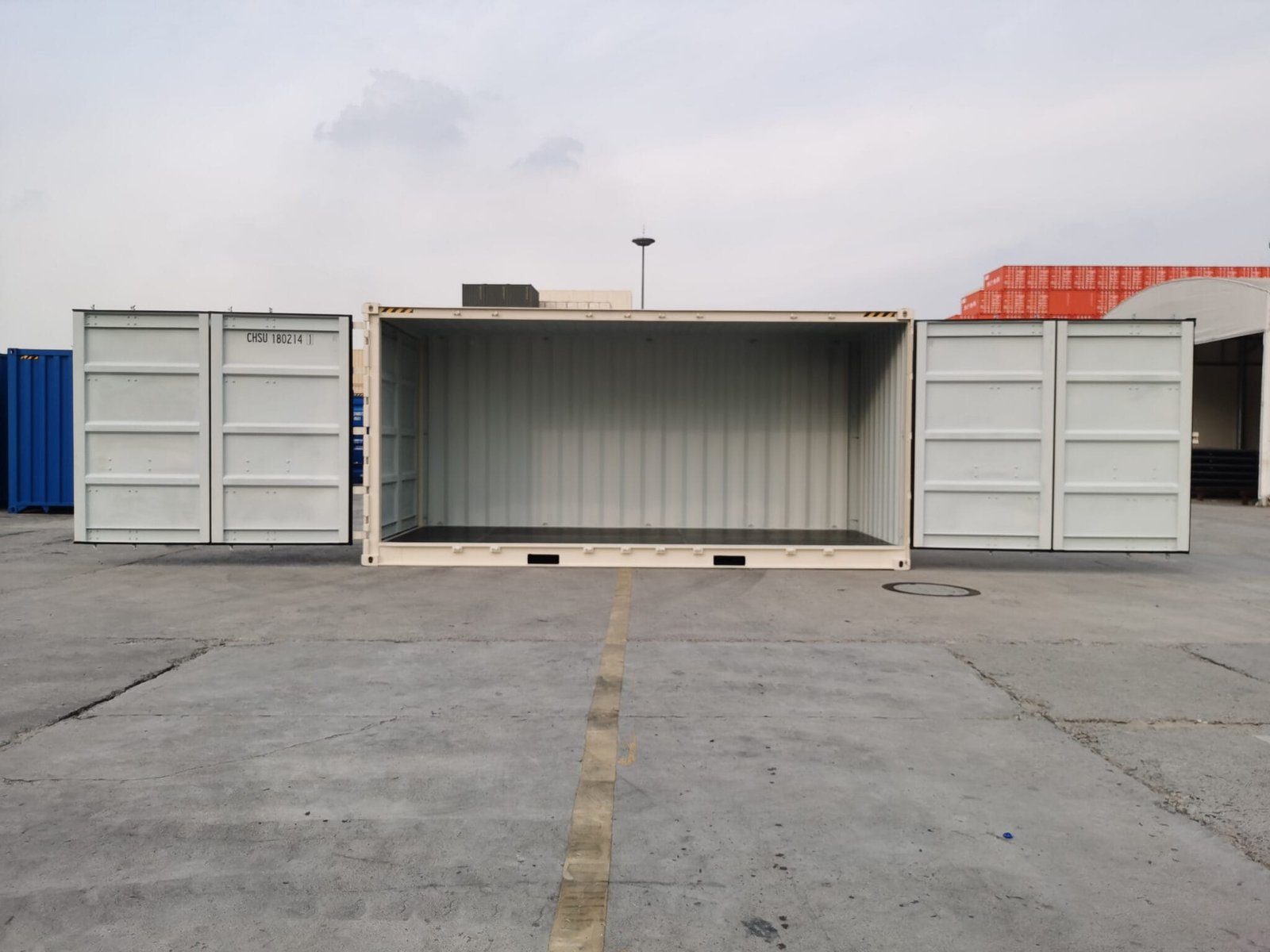
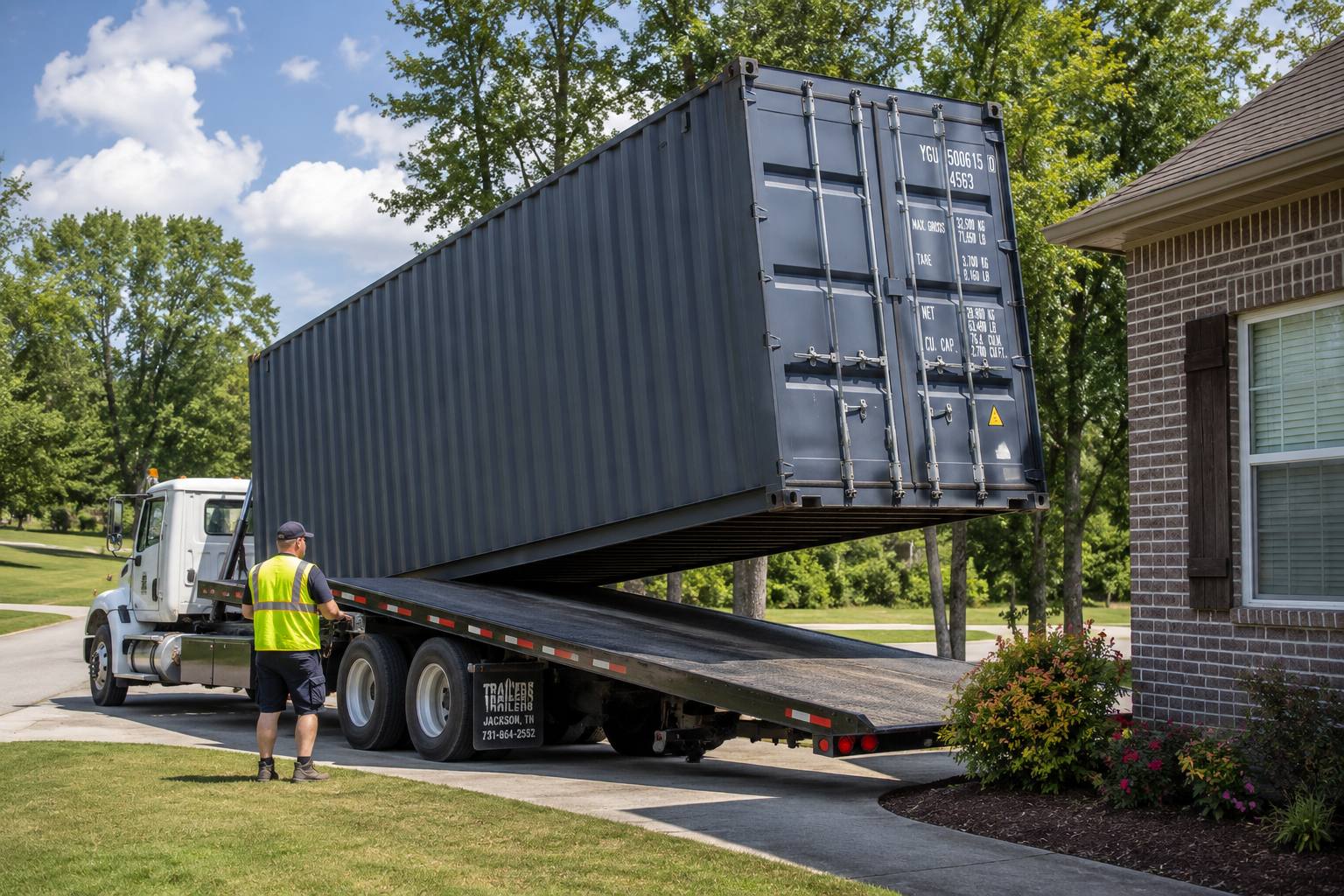
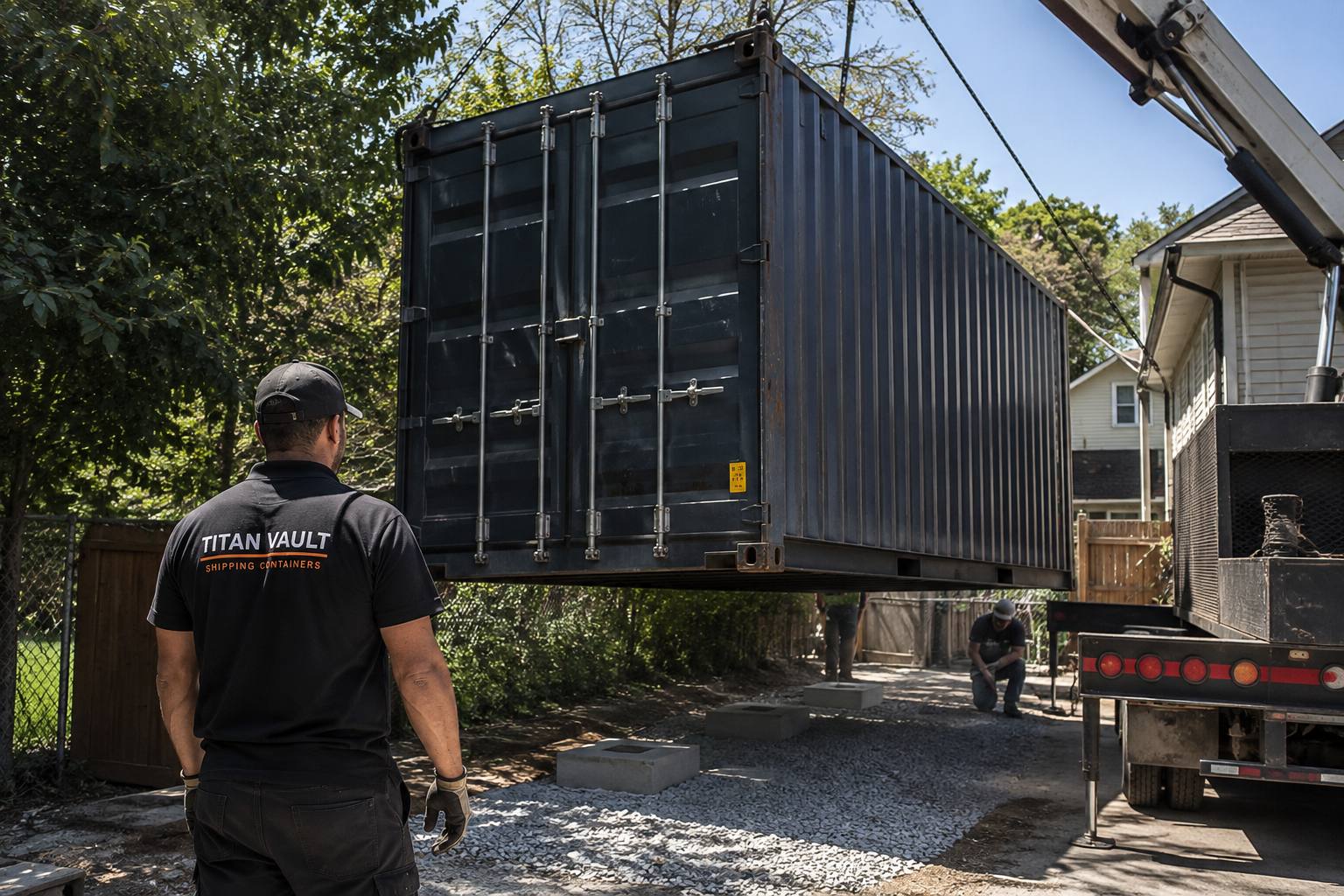
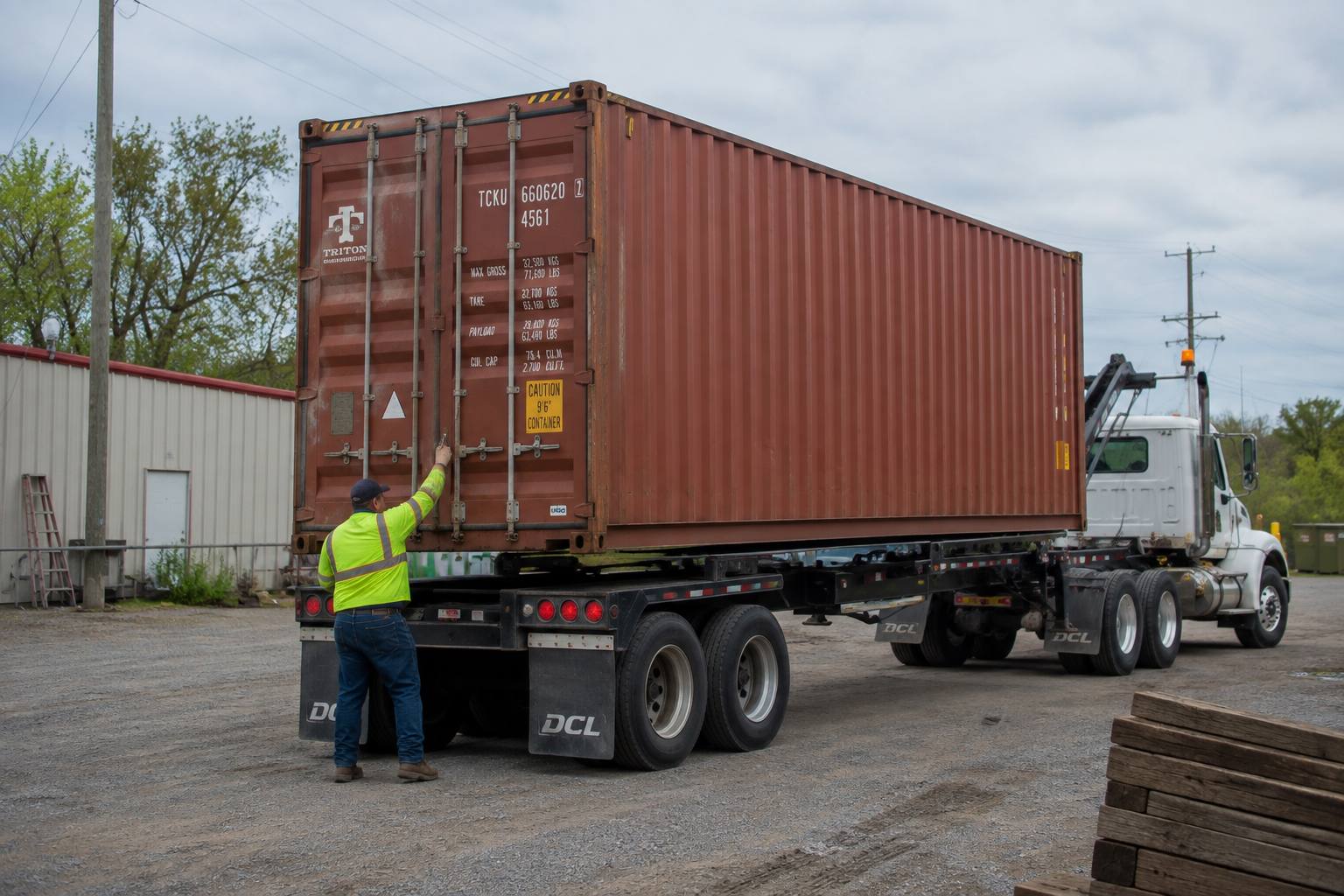
Delivery proof from recent jobs
Photographs taken on real deliveries rather than stock imagery: a tilt-bed off-load onto a driveway, a lorry-mounted crane placing a unit into a back garden, and a container checked and strapped down before it leaves the yard.
Three ways your container can be placed
1. Tilt-bed off-load
The trailer bed tilts and the container slides off the back as the lorry pulls forward. Fastest and cheapest method, and the one used for most deliveries. It needs a straight, firm run of roughly twice the container length, and the unit ends up where the lorry ends up, so placement is approximate rather than exact.
2. HIAB or lorry-mounted crane
An arm on the vehicle lifts the container off and sets it down precisely, including over a low wall, hedge or fence. Needs far less run-off space but more overhead clearance and firm ground for the outriggers. Costs more than tilt-bed and is worth every penny on a tight site.
3. Separate crane lift
The container arrives flat on a trailer and a mobile crane lifts it into position. This is the answer for courtyards, rooftops, behind buildings and anywhere a lorry simply cannot reach the final spot. Arranged in advance with a lift plan.
What the driver needs from your site
- Firm, level ground: compacted hardcore, concrete or tarmac. Soft ground traps vehicles.
- A clear approach wide enough for the vehicle and its mirrors, with room to manoeuvre.
- Roughly twice the container length of straight run-off for a tilt-bed delivery.
- At least 16 ft of overhead clearance along the whole route, not just at the placement point.
- Timber or concrete blocks stacked ready for the four corner castings.
- Somebody on site for the delivery window who can direct placement and sign for the unit.
- A decision made in advance about which way the doors should face.
The delivery preparation guide covers all of this in full, including a size-by-size table of space requirements.
Send us your delivery photo
If you have a good shot of your container arriving or in use, email it to sales@titanvaultcontainers.com with a line about the site and we will add it here with a credit. Real photographs from real sites help the next buyer far more than stock imagery does.
Not sure your site works?
Send photographs of the entrance, the approach and the final position with your postcode. We will tell you which delivery method to budget for before you order anything.