
The price on the listing is the biggest line but not the whole story. A realistic budget for a working container covers four things: the unit, getting it to you, something level to stand it on, and the handful of small upgrades that decide whether it is a good store or a damp one. After that, the running cost is genuinely close to nothing.
On this page
Why there are no prices on this page: container pricing moves with shipping rates, depot availability and the cost of getting a unit to your postcode, so any figure we published would be wrong within weeks. What is stable is the shape of the budget, which is what this page sets out. For a real number, ask us for a delivered quote.
The landed cost
Two lines, and they should always be considered together rather than separately, because the cheapest container is frequently not the cheapest delivered container.
The unit
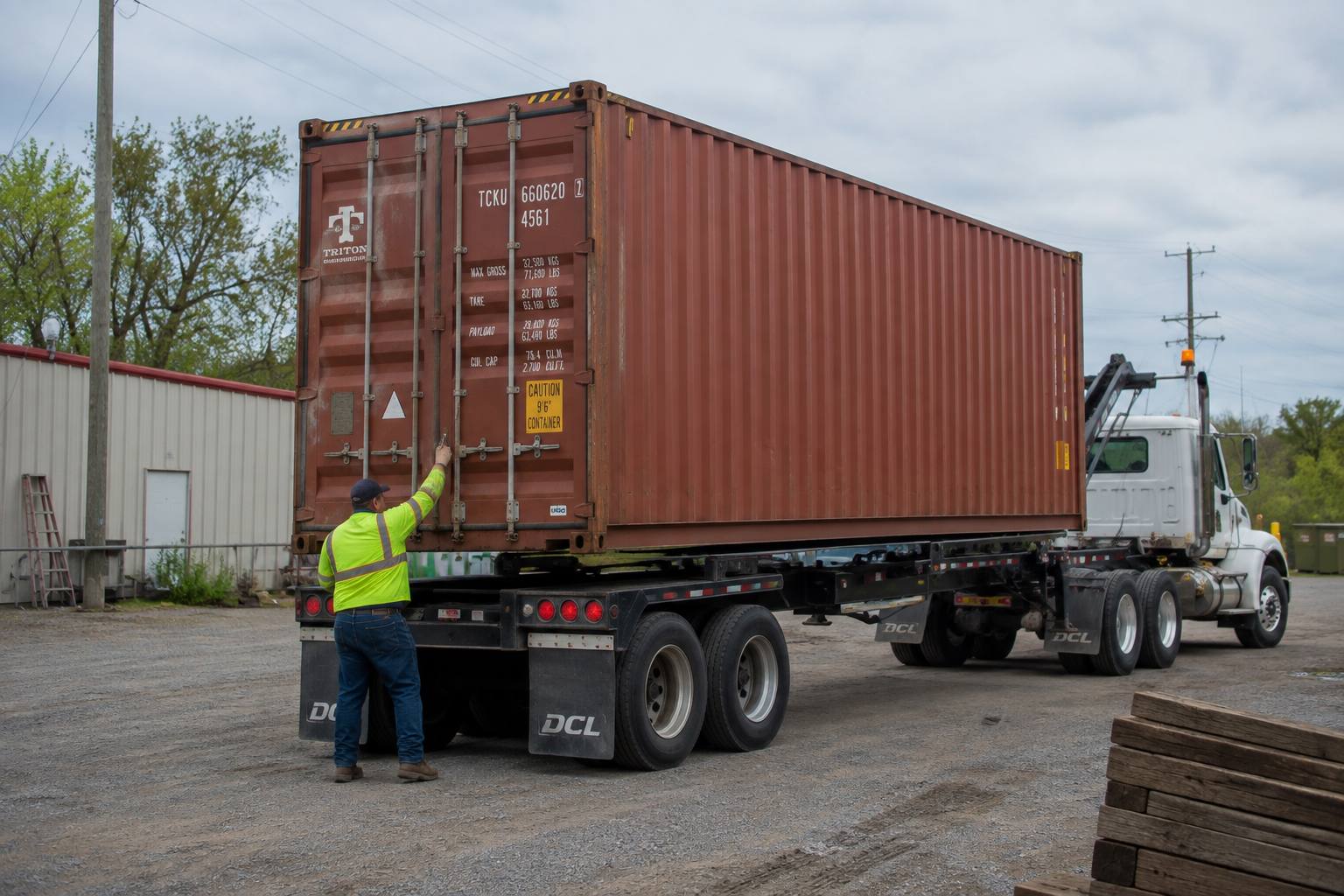
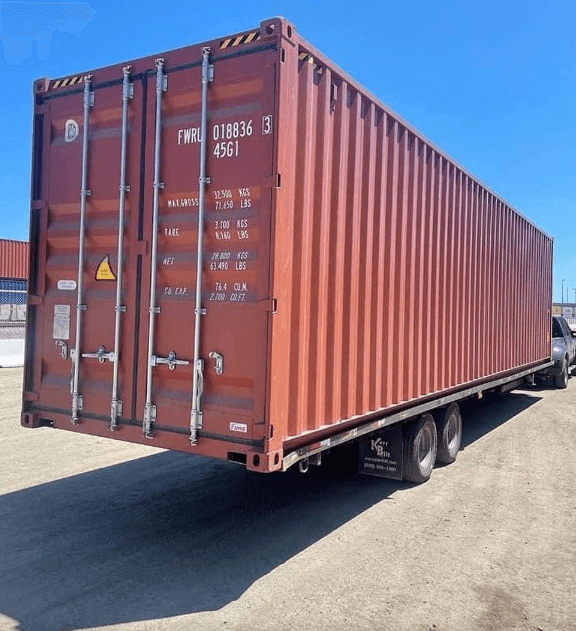
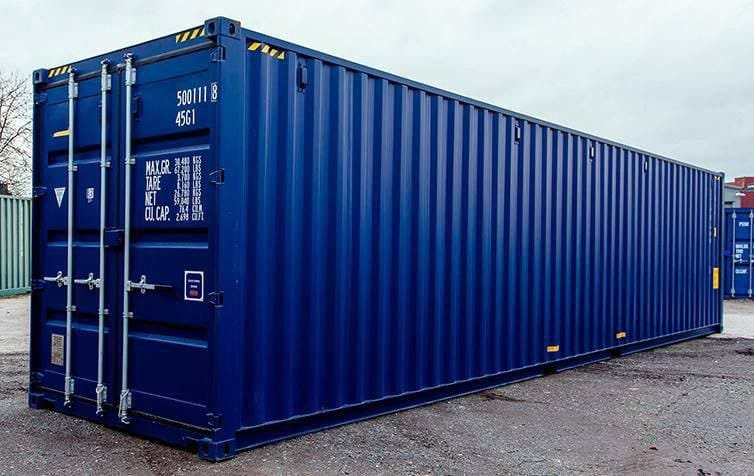
Driven by length, height, condition grade and current availability. A wind and watertight 20ft used unit sits at one end of the range; a 40ft high cube one-trip sits at the other.
Delivery
Driven by distance from the depot holding your unit, the method your access requires, and time on site. Condition grade has no effect on it whatsoever.
Because distance dominates, a nearer depot with the right unit routinely beats a cheaper container two hundred miles away. This is exactly why we quote delivered: it is the only number that lets you compare like with like. Whether your site needs a tilt-bed or a crane can move the delivery line significantly, and our delivery methods guide explains which one your access has already chosen for you.
| Line | Main drivers | Your levers |
|---|---|---|
| Unit price | Length, height, grade, availability | Choose the grade honestly for the job; consider refurbished instead of one-trip |
| Delivery | Distance, method, access difficulty, time on site | Measure access early; take a unit from the nearest depot with stock |
| Base | Ground conditions, permanence, number of bearing points | Piers rather than a slab where a slab is not needed |
| Security | Lockbox, padlock, bars, alarm | Fit the lockbox and a proper lock; the rest is risk-dependent |
| Ventilation | Number of vents, powered or passive | Four to six passive vents is cheap and transformative |
| Permissions | Local requirements, application fees, drawings | Ask a planning officer informally before you commit |
One-time setup costs
These are the lines that get forgotten in the initial sum and then arrive anyway. None of them is large; all of them are real.
- The base. Concrete piers under the corner castings are the usual answer and are inexpensive. A full slab is the expensive option and genuinely necessary far less often than people assume. Our foundations guide compares the options.
- Ground preparation and access. Clearing the standing position, cutting back branches, occasionally hardcore on the approach so the lorry can reach.
- Security hardware. A lockbox and a closed shackle padlock. Small money, and the single biggest improvement you can make to the unit as bought.
- Extra ventilation. Four to six vents rather than the factory two. Cheap, and it is the difference between dry tools and rusty ones.
- Permissions. Where an application is needed, allow for the fee and possibly a scaled site plan.
- Racking and fit-out. Shelving, a bench, lighting. Optional, but almost everybody adds it eventually, so budget for it now.
Running costs
This is where containers quietly win. A well-sited unit costs almost nothing to keep. There is no roof to re-tile, no timber to rot, no cladding to replace.
The realistic yearly commitment is the autumn hour described in our winterising guide: clear the roof, grease the gear, check the vents and confirm it is still level. Do that and the maintenance guide becomes a reference rather than a chore list. Skip it for five years and you will be paying for a roof repair instead, which is the one repair that genuinely costs money.
Upgrades that pay for themselves
Not all spending is equal. These four are the ones we would fit to our own unit, in this order.
A lockbox
Cheap, welded on in the yard, and it removes the only genuine weak point on the entire container.
Extra vents
Four to six instead of two. Prevents the damp damage that ruins contents and eats the floor.
A proper base
Piers under the castings, level and drained. It is what buys you the second and third decade of life.
A repaint, if it will be seen
Preparation matters more than paint. It protects the steel and it makes the unit acceptable where appearance counts.

Residual value
Containers depreciate, but gently and from a base that is supported by the fact that the same steel box is wanted for the same purpose everywhere. A sound unit that has been kept level, kept dry and touched up remains a straightforwardly saleable asset for decades. That is a materially different proposition to a timber store or a portable building, both of which trend towards a disposal cost rather than a sale.
Three things preserve value: a level base, so the frame stays square and the doors still work; an intact coating, especially on the roof; and a dry, sound floor. All three are exactly what the autumn hour protects. One-trip and refurbished units retain value best, which partly offsets their premium if you expect to sell on within a few years.
Buying against renting
| Scenario | Usually better | Why |
|---|---|---|
| Storage for a few months | Rent | No base, no resale, delivery inside the rate |
| A construction project of known length | Rent | Cost sits in the project and the unit goes away at the end |
| Ongoing storage at a fixed site | Buy | Purchase is recovered in a modest number of rental years |
| Anything you will modify | Buy | You cannot cut into a hire unit |
| Uncertain requirement | Rent first | Convert to purchase once the need is proven |
| A business asset on your own land | Buy | It holds value and stops being a monthly line |
The break-even point varies with rates, but the direction of travel is consistent: rental is for uncertainty and short duration, purchase is for anything settled. If you already know the container is staying for years, buying is rarely the wrong call.
Where to save and where not to
Safe places to save
Condition grade, if the unit sits behind a fence. Paint, if nobody sees it. Size, if you are honest about what you need. Fit-out, which you can add gradually.
False economies
The base. The padlock. Ventilation. Skipping the access measurement and paying for an aborted delivery. Buying a cheap shell for a conversion and paying for the repairs in labour.
The pattern is consistent: save on appearance and on capacity you do not need, spend on the things that protect the asset and the contents. A used unit on proper piers with a lockbox and six vents will outlast and outperform a one-trip sitting on grass with a hardware-store padlock, and it will cost less.
Ask for the delivered number
Tell us the size, the grade you think you need and your postcode, and we will come back with a delivered figure plus an honest view on whether a different grade or size would serve you better.
Cost questions answered
The purchase price is usually the largest single line but rarely more than about two thirds of what you spend to get a working, secure, dry store standing on your ground. Delivery, the base, security hardware and a few vents make up the rest. Ongoing costs after that are genuinely small: an hour of maintenance a year and a tin of paint every few years.
Renting suits short and uncertain requirements, typically up to a year or so, because you avoid the base, the delivery cost sits inside the rate and you can hand it back. Buying wins clearly on anything long-term, because containers hold their value well and the purchase is recovered in a relatively small number of years of rental.
Delivery, and specifically the difference between a straightforward tilt-bed drop and a crane lift on a difficult access. It is entirely predictable, but only if you measure the access before you order rather than after. Aborted deliveries are the most avoidable cost in this whole process.
Well, compared with most outbuildings. A sound unit that has been kept level, dry and touched up remains a saleable asset for decades, and one-trip and refurbished units in particular hold value noticeably better than a shed or a timber store ever will.
On the base, on the grade if the unit will be converted or seen, on a lockbox and a proper padlock, and on ventilation. Those four decisions cost little and determine almost everything about how well the container serves you and how long it lasts.
On paint, on condition grade for a unit hidden behind a fence, and on size if you are honest about what you need. A wind and watertight used unit in a yard does exactly the same job as a one-trip for a fraction of the money.