
A container starts out more secure than almost any shed: welded steel, no windows, a rigid frame. The weak point is never the walls. It is the door gear, the padlock, and the fact that an intruder has privacy and time. Deal with those three and you have a genuinely hard target.
On this page
What you get before you spend anything
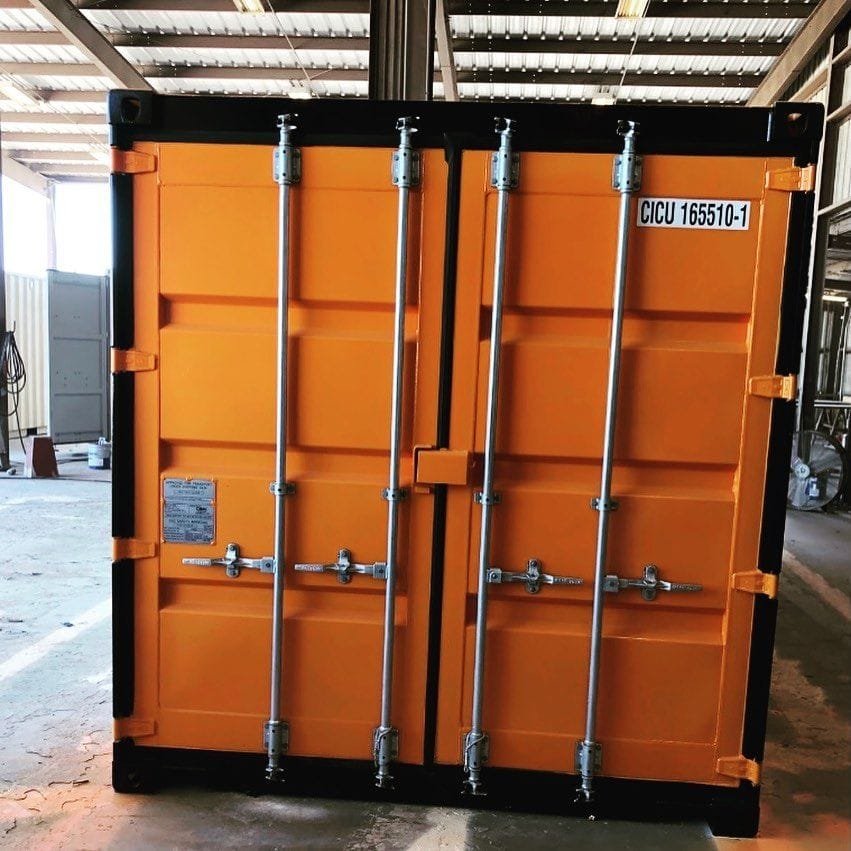
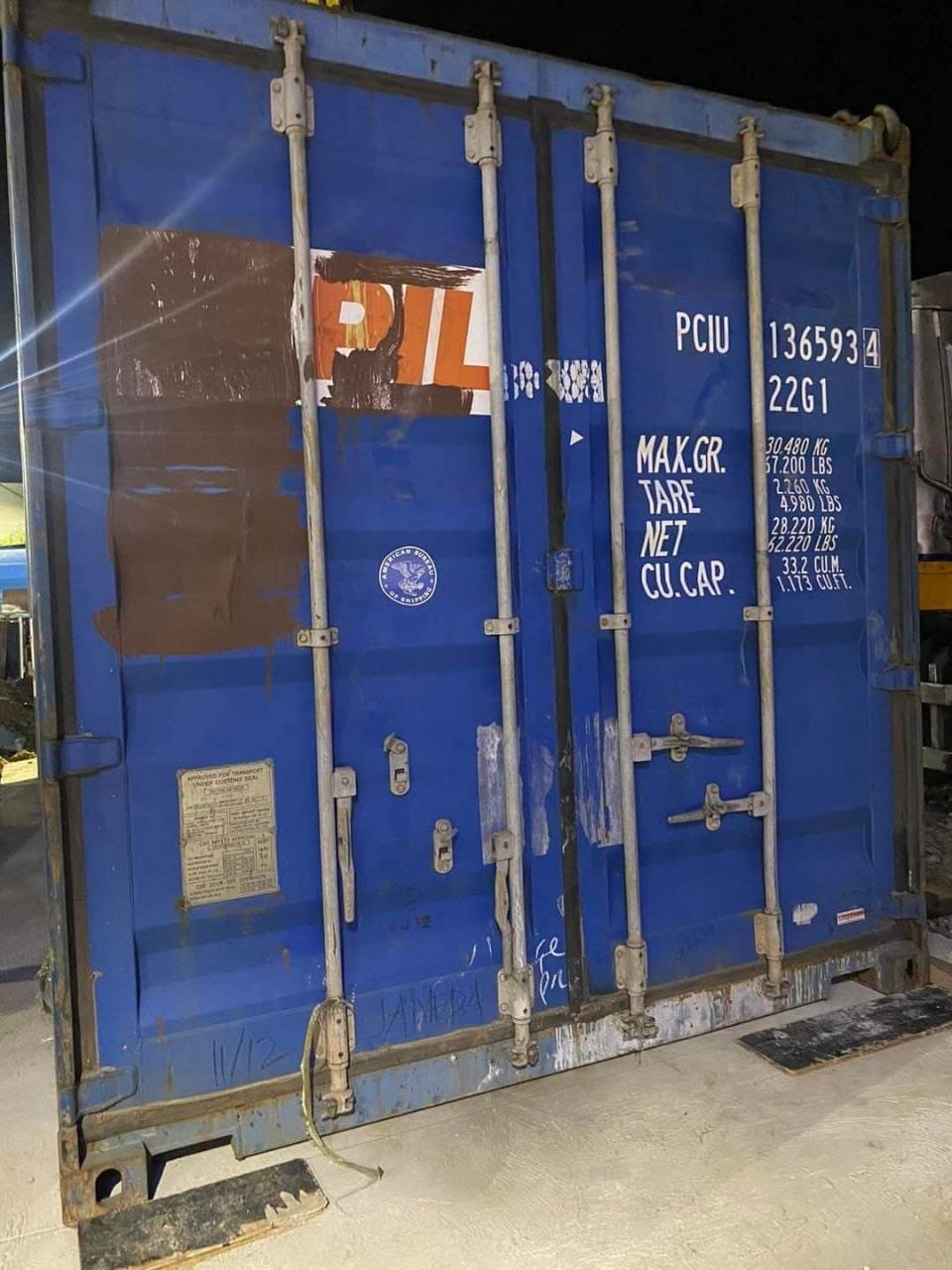
Container doors are held by two or four vertical lock rods running the full height of the opening, each turning a cam into a fixed keeper at the top and bottom. That arrangement spreads any force across the whole door frame rather than concentrating it on a single latch, which is why a container door resists prying in a way that a hinged shed door simply does not. Add corrugated 14-gauge steel panels, no glazing and a frame designed to take the weight of eight loaded containers stacked above it, and the shell is not the problem.
What the shell cannot do is protect the one small area where the padlock sits. Everything below is about closing that gap and about making the whole unit an unattractive proposition in the first place.
The lockbox: the one essential upgrade
A lockbox is a heavy steel shroud welded over the padlock position on the right-hand door. It encloses the padlock on the top, sides and front, leaving only a narrow slot to insert and turn the key. Its entire purpose is to deny access for tools, and it does that job better than any other single measure.
Many one-trip and refurbished units come with one fitted as standard. Older cargo-worthy units often do not. Retrofitting is straightforward welding work and inexpensive relative to what is usually stored inside, and we can have one fitted before delivery so it arrives ready. If you buy only one upgrade, buy this one.
Choosing a padlock
The padlock is the part most people get wrong, usually by reaching for whatever was on the shelf at the hardware store. An open-shackle brass padlock is the weakest link in an otherwise strong system.
- Closed shackle. The shackle should be shrouded by the body so almost none of it is exposed. Round puck and disc-style container locks are designed exactly for this.
- Hardened body. Look for boron or hardened steel construction rather than brass or laminated bodies.
- Weather rating. The lock lives outdoors. A sealed, drained body and a cover keep the mechanism working through winter.
- Keyed alike, if you have several. Multiple units on one key is far more convenient, and convenience is what keeps people actually locking up.
- Grease it. A seized padlock in January is the reason doors get left unlocked in February.
Further hardware options
| Measure | What it does | Worth it when |
|---|---|---|
| Lockbox | Shields the padlock from tools completely | Always. This is the baseline, not an extra |
| Closed shackle padlock | Removes the exposed point on the lock itself | Always, and replace any open-shackle lock immediately |
| Security bar or crossbar | Spans both doors and resists them being forced apart | High-value contents, or remote and unobserved sites |
| Additional lock rod keepers | Adds fixing points along the door edge | Older units where the original keepers are worn |
| Anti-tamper hinge pins | Prevents hinge pins being driven out | Long-term unattended storage |
| Internal steel shelving fixed to walls | Removes room to work and makes contents awkward to shift quickly | Tool and equipment storage |
| Ground anchors and wheel-clamp style locks | Deters the whole unit being lifted or dragged | Sites with vehicle access and no gate |
All of the above can be fitted before delivery. See our modifications guide for what we can do in the yard rather than leaving you to arrange it on site.
Siting, lighting and sightlines
Hardware is the second line of defence. The first is making the container a poor target, and that is decided the moment you choose where it stands. An intruder needs three things: to get to the doors, to work on them unobserved, and enough time. Position removes all three more cheaply than steel does.
Face the doors towards a building, a busy yard, a camera or a fence line rather than out into an unlit hedge. Leave enough swing room for your own use but no more, so there is no comfortable working space. Where the unit has to sit in the open, position it with the door end against a wall or another container. Motion-triggered lighting is cheap and remarkably effective, and gravel underfoot makes an approach audible. Screening planting that hides the container from the road also hides it from casual scouting, which cuts both ways, so pair it with lighting.
Alarms, cameras and monitoring
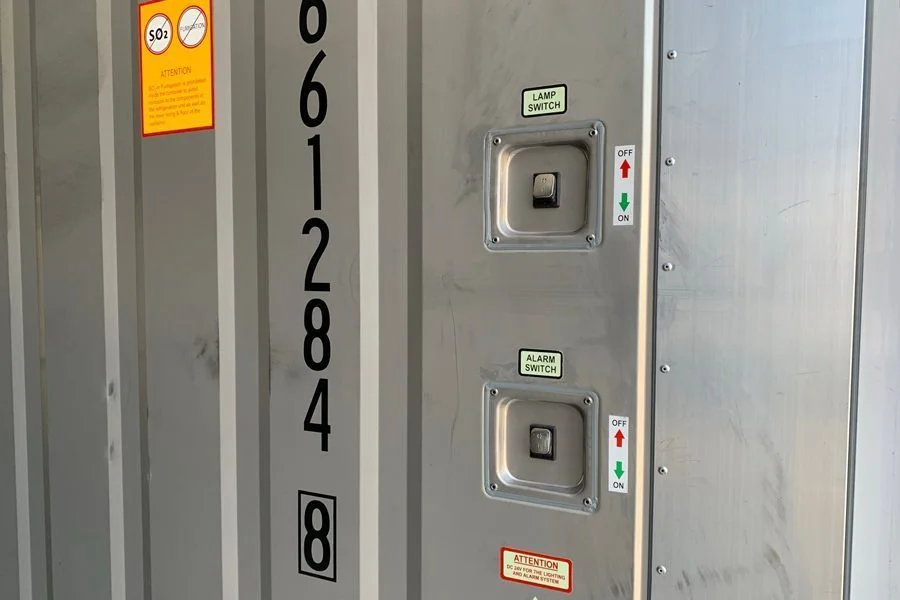
A steel box is an easy environment to alarm. Battery or solar powered systems with a magnetic door contact, an internal motion sensor and phone notifications cost very little and need no wiring. Mobile signal can be weak inside the shell, so mount the transmitter near the door end or fit an external antenna, and test alerts from off site before you rely on them.
Cameras earn their keep mostly as deterrent and as evidence. Aim one at the door end and one along the approach rather than trying to cover everything. Solar and battery cameras with cellular connectivity work well where there is no power. If the container is on a site with existing CCTV, extending coverage to include the door end is usually the cheapest option of all. Any mains electrical work should be installed and certified by a qualified electrician.
Insurance and record keeping
Talk to your insurer before you buy, not after an incident. Policies differ widely on whether goods stored in an outbuilding or container are covered at all, and many that do cover them impose conditions: a specified lock standard, a lockbox, an alarm, or a requirement that the container sits inside a locked compound. Get those requirements in writing and meet them exactly.
Separately, keep your own records. Photograph the contents, keep serial numbers for tools and equipment, and note the container number from the door and the CSC plate. Our terminology glossary explains where to find those markings. It is dull work that takes twenty minutes and makes any claim dramatically easier.
Have it delivered secure
We can fit a lockbox, security bars, additional keepers and upgraded padlocks before your unit leaves the yard, so it is protected from the first day rather than the first free weekend.
Security questions answered
As a starting point, yes. A container is a windowless steel box with a rigid frame, which puts it well ahead of any timber shed or garage door. The weak point is never the panels, it is the door gear and whatever padlock is hanging off it, so that is where any money you spend should go.
A lockbox is a steel shroud welded over the padlock position that encloses the padlock on all sides except a small access slot. It is the single most effective upgrade you can make, because it removes the ability to get tools onto the lock. If your unit does not have one, have one fitted.
A closed shackle padlock designed for container use, ideally a round or puck style, with a hardened body and as little exposed shackle as possible. Standard hardware-store padlocks with an open shackle are the most common point of failure on otherwise well-secured containers.
Considerably. Facing the doors towards a building, a fence or a camera removes the privacy and working room an intruder needs. Doors facing an unlit boundary hedge give both. Position is free to change before delivery and expensive to change afterwards.
Yes. Battery and solar powered alarms with door contacts, internal motion sensors and phone alerts are inexpensive and work well in a steel box. Signal can be poor inside, so an external antenna or a unit sited near the door helps. Any mains installation should be certified.
Some will, some will not, and many will only on specific conditions such as a named lock standard, a lockbox, an alarm or a requirement that the unit sits within a secured compound. Ask your insurer before you buy rather than after a claim, and get the requirements in writing.