
Nine times out of ten, water inside a container is not a leak. It is the air you shut in last week condensing on cold steel at four in the morning. Containers are built airtight for a reason, and on land that virtue becomes the problem. Ventilation is how you get the virtue without the problem.
On this page
Why containers sweat
Air holds water, and how much it can hold depends on its temperature. Warm air holds a lot; cold air holds very little. When you close a container on a mild damp afternoon you seal in air carrying a certain amount of moisture. Overnight the steel shell loses heat to the sky far faster than the air inside cools, so the roof and the upper walls become the coldest surfaces in the box. When the air touching them drops below its dew point, the water it was carrying has nowhere to go but out, onto the steel.
By morning it has run down the walls or dripped from the ceiling, which is why it is universally known as container rain. The steel has not failed and the seals have not failed. Physics simply happened in a very well-sealed box.
Three things make it worse: a container in shade with a cold clear sky above it, contents that carry their own moisture such as timber, cardboard, textiles or anything recently washed, and a unit sitting on damp ground with no airflow underneath. That last one is why our foundations guide insists on lifting the unit clear.
Condensation or a leak?
Before you spend money, work out which problem you actually have. The two need completely different solutions and the diagnosis takes ten minutes.
Wait for a dry spell
Give it two or three dry days, then check inside early in the morning after a cold night.
Water with no rain
If it is wet inside without rain, it is condensation. Move to ventilation.
Shut the doors and look up
From inside with the doors closed, look for pinpricks of daylight at the roof, the seams and the door seals. Daylight means water.
Note where it appears
Condensation appears broadly, worst on the ceiling. A leak appears in one repeatable place, often with a stain trail below it.
Check the gaskets
Perished or distorted door gaskets let rain in at the threshold. They are a cheap replacement and a common culprit.
If it is a leak: our maintenance guide covers roof repairs and seal replacement, and the painting guide covers treating the corroded area properly rather than just sealing over it.
Passive ventilation done properly
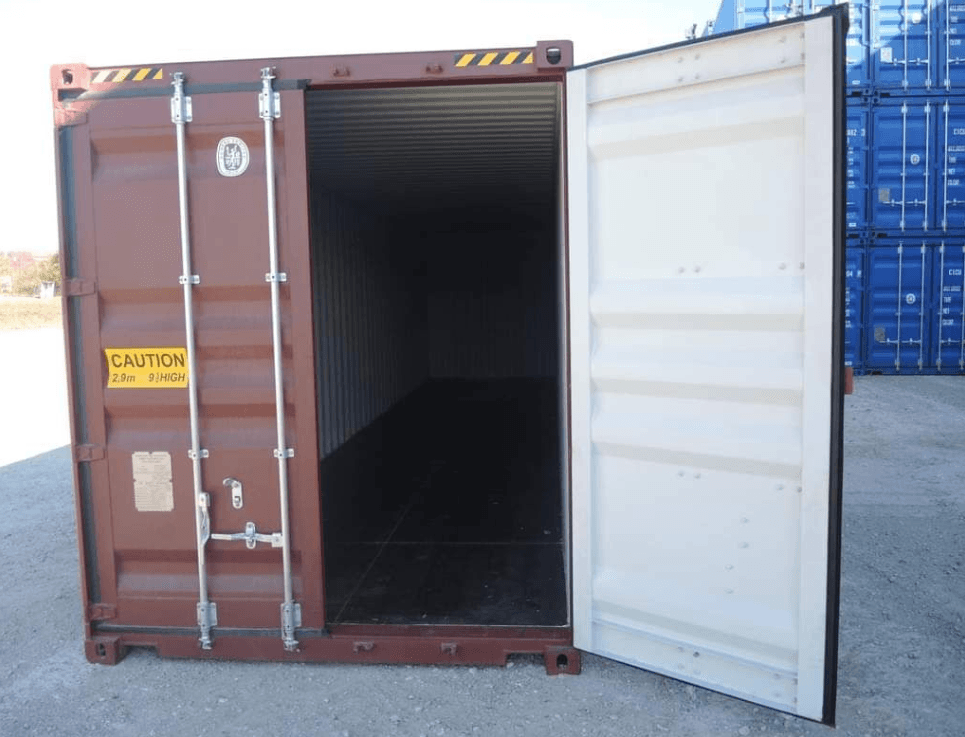
Most containers leave the factory with two small passive vents, one on each side near the top. That is sized for a sealed cargo crossing an ocean in a matter of weeks, not for goods living on land through a full seasonal cycle. Adding vents is inexpensive and it is the highest-value modification available.
The principle that matters is cross-flow. Air will not move through a box that has openings in only one place, no matter how many you cut there. You need low openings where cooler air can enter and high openings where warmer, wetter air can leave, ideally at opposite ends of the unit so the whole volume is swept rather than one corner.
- Fit in pairs, high and low. Low intake at one end, high extract at the other. Convection does the rest for free.
- Four to six vents total. Two is a factory minimum. Four transforms a 20ft unit; six suits a 40ft or a damp site.
- Louvred and screened. Vents should shed driving rain and keep out insects and rodents without restricting flow.
- Do not block them. Stacking boxes against a vent is the most common way people defeat their own ventilation.
- Consider a roof turbine. A wind-driven whirlybird on the roof pulls warm air out continuously with no power and no maintenance.
Powered and active options
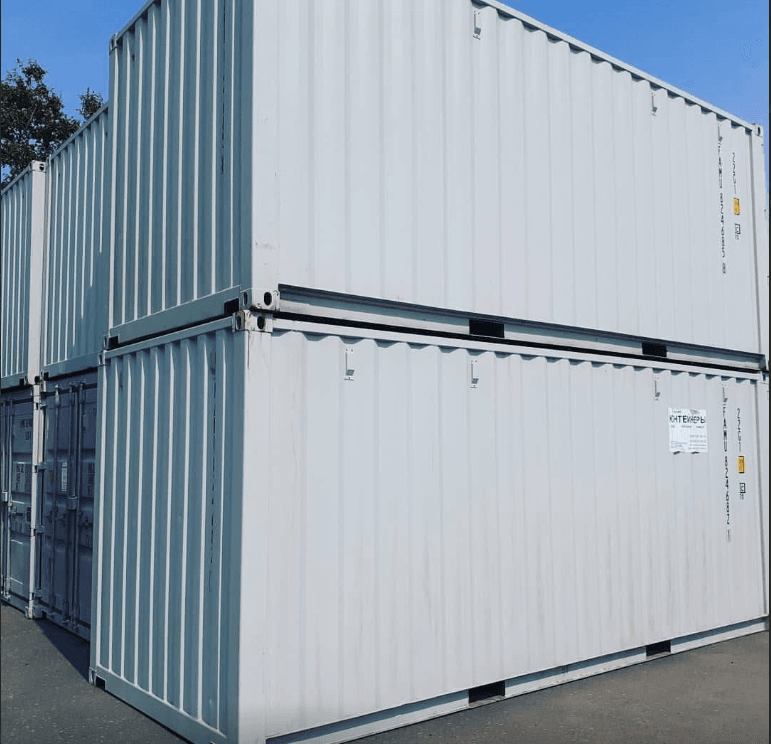
Passive ventilation is enough for the great majority of storage units. Powered ventilation earns its place in four situations: the unit is occupied, the contents give off fumes or vapour, something inside generates heat, or the container has been insulated and air-sealed so tightly that natural flow has been designed out.
| Option | How it works | Best suited to |
|---|---|---|
| Louvred passive vents | Convection and wind pressure | All general storage. The default answer |
| Roof turbine vent | Wind-driven extraction from the highest point | Damp sites, tall stacks of goods, no power available |
| Solar extract fan | Small PV panel drives a fan when the sun is on the unit | Remote sites, seasonal use, no mains supply |
| Mains extract fan | Continuous or humidity-triggered extraction | Workshops, occupied units, fume or heat generation |
| Humidistat-controlled fan | Runs only when relative humidity passes a set point | Insulated units and anywhere holding sensitive goods |
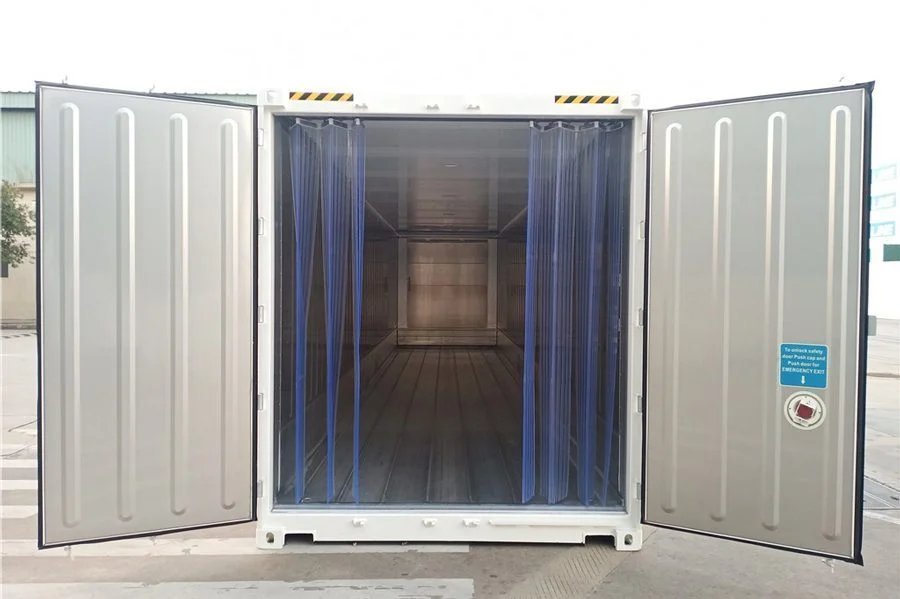
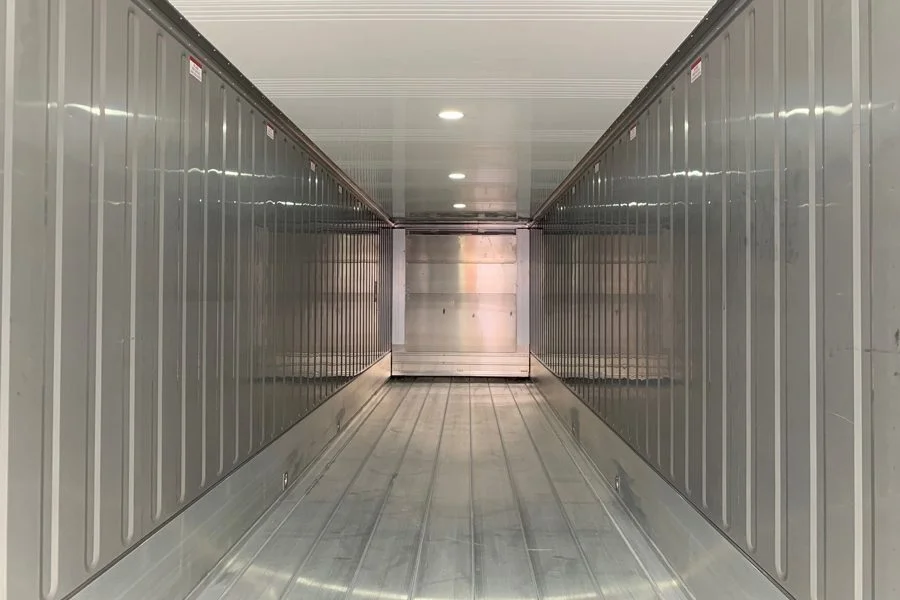
| Refrigerated or climate unit | Full temperature and humidity control | Cold stores and anything genuinely temperature critical |
Managing moisture inside the box
Ventilation removes moist air. The other half of the job is not creating so much of it in the first place, and making sure air can actually reach the surfaces where condensation would form.
- Get everything off the floor. Pallets or battens let air move underneath and stop moisture wicking up into cardboard and fabric.
- Leave air gaps at the walls. Keep stacked goods a couple of inches clear of the steel rather than pressed against a cold surface.
- Do not store wet. Damp timber, wet tarpaulins and freshly washed equipment will release their moisture into the box and it has to go somewhere.
- Use desiccant. Hanging absorbers and desiccant tubs are cheap and genuinely effective in a smaller sealed space. Replace them on a schedule.
- Add a hygrometer. A five-pound humidity gauge tells you whether your ventilation is working. Aim to sit around fifty per cent.
- Open the doors on dry days. Twenty minutes of through-draught on a dry, breezy day does more than any device you can buy.
Have the vents fitted before it arrives
We can add extra louvred vents, roof turbines or a humidistat-controlled extract fan in the yard, which is quicker, tidier and cheaper than arranging it once the unit is on your site.
Where insulation fits in
Insulation and ventilation are often presented as alternatives. They are not. Insulation attacks the cause by keeping the internal surface temperature above the dew point so condensation never forms. Ventilation attacks the symptom by removing moist air before it can condense. The best results come from doing both, in that order.
The critical detail is continuity. Closed-cell spray foam works so well in containers because it follows every corrugation and seals as it insulates, leaving no cold bridge and no hidden void. Rigid board on battens can work equally well but only if the air sealing is detailed properly, otherwise you have simply moved the condensation into a cavity where you will not see it until the batten rots. Our insulation guide goes through each system in detail.
What to fit for what you store
| Contents | Minimum specification | Why |
|---|---|---|
| Plant, machinery, steel | Four passive vents | Tolerant of humidity, but you still want the air moving |
| Hand tools and power tools | Four to six vents, goods off the floor, desiccant | Surface rust starts long before anything visible happens to the box |
| Textiles, paper, cardboard | Six vents plus desiccant, or insulate | These materials absorb and release moisture continuously |
| Electronics and instruments | Insulate plus humidistat fan | Condensation on a circuit board is a failure, not an inconvenience |
| Furniture and timber | Six vents, spacing off the walls, hygrometer | Timber moves with humidity and finishes bloom in damp air |
| Occupied office or workshop | Insulation plus mechanical extraction | People and heaters are themselves a significant moisture source |
| Chilled or frozen goods | Refrigerated unit | Active control, not ventilation, is the correct answer here |
Ventilation questions answered
That is condensation, not a leak. Warm moist air inside the container meets the cold steel of the roof and walls overnight, the moisture drops out of the air and runs down. It is called container rain, and it is the single most common complaint from new owners. Ventilation and airflow fix it.
Check on a dry day after a cold night. Water present with no rain means condensation. A leak shows up during or immediately after rain, usually in one repeatable spot, and you can normally find daylight from inside with the doors shut. Condensation appears everywhere at once, especially on the ceiling.
Two passive vents per unit is the factory standard and it is designed for a sealed cargo crossing an ocean, not for goods sitting on land through a British winter. Four to six vents makes a genuine difference. Fit them high on one end and low on the other so air actually moves rather than just leaks.
Not for general storage. A powered extract fan earns its place where a container is occupied, where you store solvents or fuel, where a machine generates heat, or where you have insulated the unit and sealed it tightly. For a normal store, well-placed passive vents plus airflow inside are enough.
Only if it is done properly. Insulation works by keeping the steel surface above the dew point, so a continuous, sealed layer such as closed-cell spray foam is very effective. Insulation with gaps, or rigid board on battens without air sealing, simply moves the cold surface into the void where you cannot see it forming.
Yes, within limits. Hanging absorbers and desiccant tubs pull a useful amount of moisture out of a small sealed space and are cheap insurance for tools, documents and electronics. They are a supplement to ventilation, not a substitute, and they need replacing regularly to keep working.