
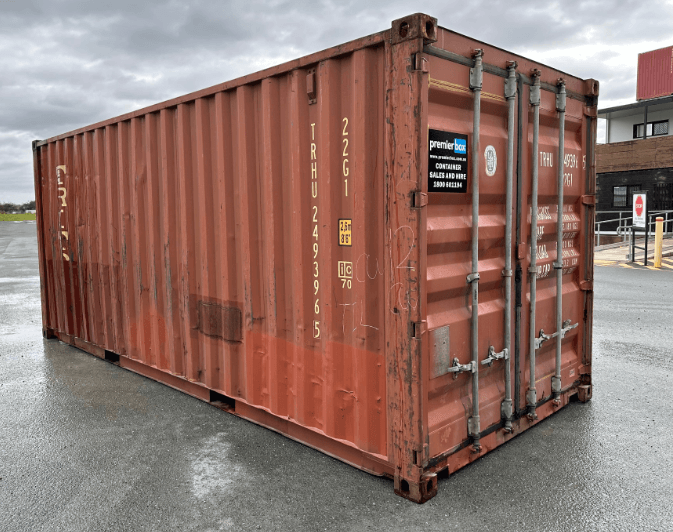
The paint on a shipping container is a sacrificial layer, and once it fails the steel underneath starts losing ground. Repainting is genuinely worth doing, but the result is decided almost entirely by preparation. A roller over loose scale buys you one season. Correct preparation buys you a decade.
On this page
Why containers get repainted
There are three honest reasons, and they call for different levels of effort. The first is protection: the factory coating has broken down, rust is showing and you want to stop it spreading. The second is appearance: the box works perfectly but the shipping line livery, the patch repairs and the mismatched panels look industrial in a setting that is not. The third is planning goodwill, where a colour that recedes into a hedge line causes a fraction of the friction that corporate blue does.
Be clear which one you are solving. A protective repaint of the roof and any rusted areas is a weekend job with real returns. A full cosmetic refinish of all four sides, the roof and the doors is a serious undertaking, and for many buyers it is cheaper to have us shot-blast and spray the unit in the yard before delivery than to do it by hand on site.
Preparation: where the result is decided
Container steel is Corten weathering steel, originally coated with a high-performance marine system. That original coating is usually excellent, so the aim is not to strip the container back to bare metal. The aim is to remove everything that has stopped adhering and leave a clean, dry, dull, sound surface for the new coating to grip.
- Wash first. Pressure wash the whole unit, including under the top rails and inside the corrugations where salt, dirt and organic matter collect. Let it dry completely.
- Degrease. Containers accumulate diesel film, road grime and wax. Paint will not bond through any of it. A dedicated degreaser makes a visible difference.
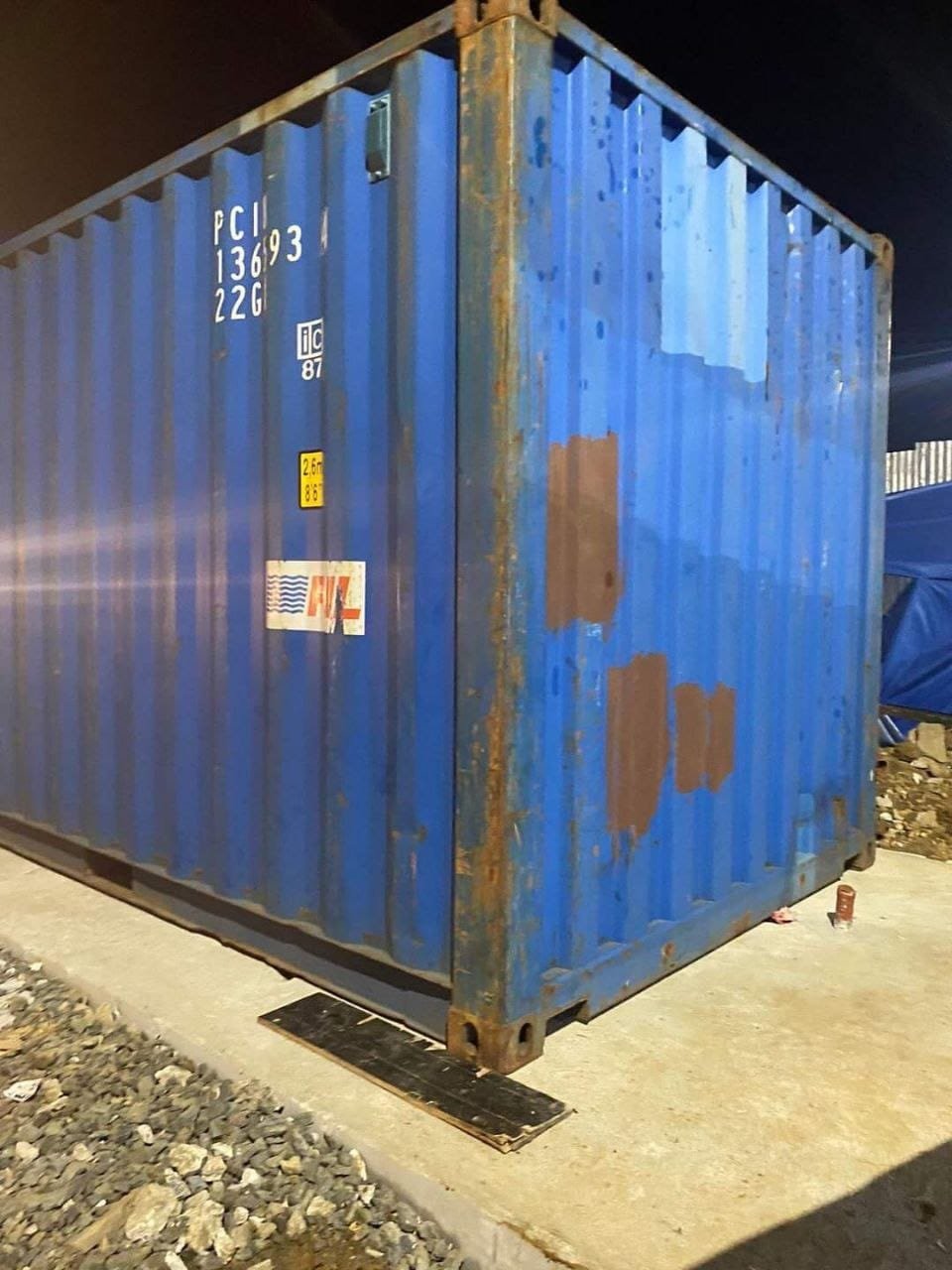
- Remove failing material. Wire brush, needle gun, angle grinder with a wire cup or abrasive disc. Work back until the edges of each patch are firm and feathered, not lifting.
- Treat the rust. Once back to sound metal, a rust-converting or self-etch primer on those areas gives the topcoat something stable to sit on.
- Abrade sound paint. Existing coating that is well bonded only needs a scuff to break the gloss. Do not remove what is doing its job.
- Mask the plates. Do not paint over the CSC plate, data plates or the identification markings if the unit may ever travel again. Our glossary explains what each plate is for.
If the steel is pitted right through in places, paint is not the answer for those areas. They need cutting out and plating in before any coating goes on. Our condition guide covers how to tell cosmetic surface rust from structural loss.
Choosing a paint system
| System | Suits | Trade-offs |
|---|---|---|
| Two-part epoxy | Maximum durability, coastal and industrial exposure, roofs | Highest cost, limited pot life once mixed, less forgiving to apply, can chalk in strong UV without a topcoat |
| Direct-to-metal alkyd or enamel | The practical choice for most owners doing the work themselves | Not as tough as epoxy, but far easier to apply and to touch up later |
| Polyurethane topcoat | Colour and gloss retention over an epoxy primer | Best results sprayed, so usually a workshop job rather than a site job |
| Elastomeric roof coating | Roofs specifically, where minor movement and ponding occur | Thick, heavy on material, and not intended for vertical panels |
| Masonry or household exterior paint | Nothing | Will not adhere or flex correctly on container steel; it peels, usually within a year |
Whichever you pick, stay inside one manufacturer’s system. Primer, intermediate and topcoat are formulated to bond to each other, and mixing chemistries between brands is a common cause of coatings that look perfect for six months and then lift in sheets.
Colour, heat and planning
Colour is not purely cosmetic on a steel box in direct sun. A dark container in strong summer sun becomes genuinely unpleasant inside, and the difference between a light grey and a near-black finish can be substantial in internal temperature. If the unit stores anything heat-sensitive, or if anyone spends time in it, go lighter or insulate.
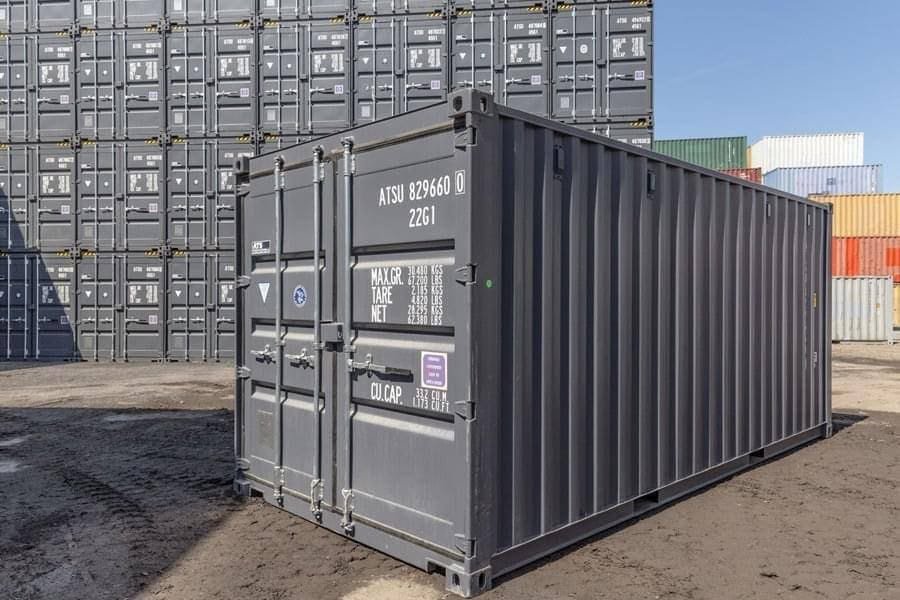
Against that, muted greens, greys and browns are far easier to live with visually and attract fewer objections in residential and rural settings, as covered in our permits and zoning guide. A mid-tone grey-green is the usual compromise: it recedes into planting, it does not cook, and it hides handprints and scuffs better than either extreme.
Applying it, and how much you need
Corrugated panels have far more surface area than their flat dimensions imply, which is why almost everyone underestimates quantities. As a planning figure, expect somewhere around five to seven gallons per coat for a 20ft unit and nine to twelve for a 40ft, including the doors but excluding the roof and interior. Buy generously; running out mid-panel produces a visible join.
- Airless spray is fastest and gives the most even finish in the corrugations, but needs masking and calm conditions.
- Roller and brush works well and is the sensible choice on site. Use a long-pile roller for the ribs and cut the edges with a brush.
- Two coats, always. One coat looks finished and behaves like half a coat.
- Work with the weather. Avoid painting in full midday sun on hot steel, in high humidity, or when overnight temperatures will fall below the manufacturer’s minimum.
- Doors and gear. Mask the gaskets, and grease the cam bars and hinges after painting rather than coating them shut.

The roof and the interior
The roof is the highest-value area to coat and the one most often skipped because nobody sees it. Water sits in the corrugations, leaves and grit collect, and corrosion works quietly from above. Clear it, treat it, and give it two coats of something tough. If ponding is a known issue, an elastomeric roof coating over a treated surface is a good investment.
Interiors are optional. A light-coloured coating on the walls makes a dark box far more usable and reflects work lighting, and on plywood floors an appropriate sealer keeps moisture and spills out of the timber. If you plan to insulate and line the unit, do not spend money painting walls that will be hidden; see our modifications guide instead.
Or have it arrive already finished
We can supply units shot-blasted and repainted in the colour you want before delivery, which gives a better and longer-lasting finish than any hand application on site, and starts the maintenance clock at zero.
Painting questions answered
Only over tight, sound surface rust that has been wire-brushed back to a firm, dull finish, and then only with a primer designed for the job. Painting over loose scale or flaking coating simply seals moisture in and the new paint lifts within a season. Where the rust is pitted or flaking away in layers, it needs mechanical removal first.
A two-part epoxy or a good direct-to-metal alkyd made for marine and industrial steel. Household exterior emulsion and masonry paint will not last on container steel. Whatever you choose, use a compatible primer and topcoat from the same system rather than mixing brands and chemistries.
As a working figure, budget roughly five to seven gallons of paint per coat for a 20ft unit and nine to twelve for a 40ft, more if you are painting the roof and the interior. Corrugated panels have far more surface area than their flat dimensions suggest, which is where most people underestimate.
No. Original marine coatings are usually excellent and well bonded, and they make a sound base. You only remove what is failing: loose material, flaking edges, rust and any area where the coating has lost adhesion. Sound existing paint should be cleaned, degreased and abraded, not stripped.
Yes, and it should be your priority. The roof takes the most weather, holds water in the corrugations and is where corrosion starts on most containers. It is also the part nobody inspects. If you only have budget for one area, spend it up there.
Practically, lighter colours reduce internal heat gain considerably in strong sun, while darker greens and greys attract far fewer planning complaints in residential settings. Avoid deep blacks and dark blues in hot climates unless the unit is insulated, because the inside becomes unusable in the afternoon.